U.S. and Israel Strike Iran, Triggering Regional Retaliation and a Global Scramble to Contain Escalation
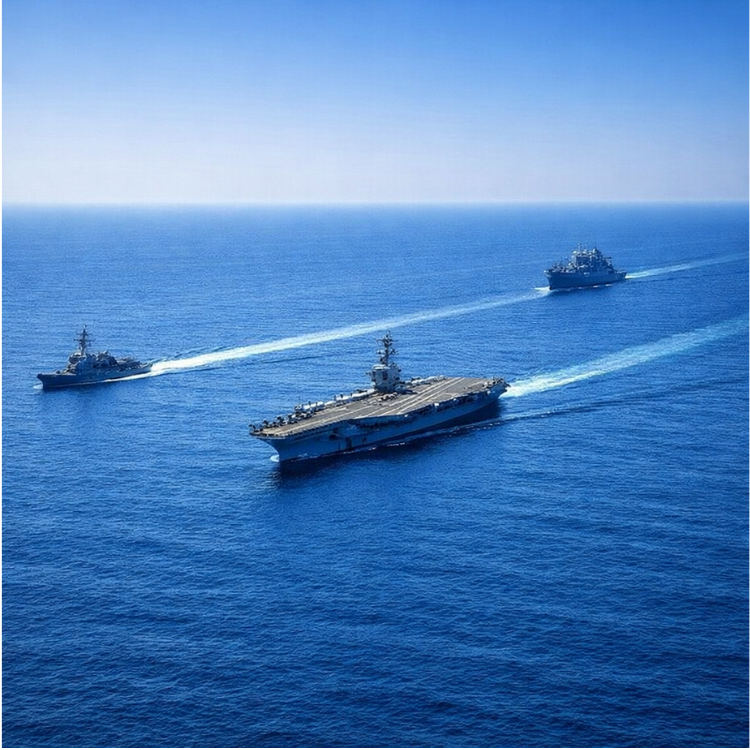
A Coordinated U.S.-Israeli Military Campaign
A coordinated U.S.-Israeli military campaign hit multiple targets inside Iran on Saturday, with Israel describing the opening salvo as a pre-emptive attack and Iranian officials vowing retaliation. Within hours, Iran launched missiles and drones toward Israel and toward U.S.-linked targets across the Gulf—raising immediate questions about whether this becomes a brief exchange, a sustained air campaign, or a broader regional war.
This article focuses on what can be verified right now, what remains uncertain, and how the information environment is shifting under pressure.
What We Know So Far
Israel confirmed it initiated strikes inside Iran, and Israeli officials indicated the operation was coordinated with the United States.
U.S. President Donald Trump publicly framed the action as “major combat operations”, signaling the scale is not limited to a single night of strikes.
Iran’s Revolutionary Guard said it launched an initial retaliatory wave, and reporting confirms incoming fire toward Israel as air defenses engaged. Early coverage describes missiles and drones in flight and interceptions underway.
What Is Claimed, But Not Yet Independently Nailed Down
Several outlets report explosions in Tehran and other locations, but details about the full target set—and the degree of damage—are still fragmentary. Some reporting suggests strikes near leadership and command nodes, but casualty and “who was targeted” narratives are exactly where early claims tend to outrun verification.
For now, treat any viral posts asserting “facility destroyed,” “leadership eliminated,” or “nuclear program ended” as unproven unless corroborated by multiple reputable outlets and supported by independently verifiable evidence (geolocation, consistent timestamps, satellite imagery, or official confirmation that aligns with physical realities).
A useful synthesis of what’s publicly known versus still fuzzy is emerging in rolling explainers like what we know so far—but even those are constrained by limited access and an actively contested narrative space.
The Information Blackout is the Story Inside the Story
A near-total connectivity disruption inside Iran is making verification dramatically harder. Multiple reports cite national connectivity dropping to around 4%, consistent with a state-imposed internet blackout.
That matters because it changes what “evidence” looks like:
Fewer first-person uploads from inside Iran (and a higher likelihood that what does appear is selectively released).
A spike in recycled footage from prior conflicts, mislabeled clips, and fabricated “official statements.”
A verification premium on geolocated imagery, commercial satellite updates, and corroborated reporting from multiple independent desks.
Civilian Ripple Effects: Airspace, Shipping, and Energy
The attacks and retaliation are already reshaping civilian movement. Multiple countries and airlines closed airspace, canceled routes, and rerouted long-haul flights, creating a fast-moving picture of flight disruption across the region.
At sea, Greece advised Greek-flagged vessels to avoid high-risk corridors including the Persian Gulf, Gulf of Oman, and the Strait of Hormuz—an unusually direct warning that reflects the perceived risk to commercial shipping amid heightened maritime threats.
Oil markets are reacting too. Reuters reports OPEC+ may consider a larger-than-planned supply increase as a contingency measure, signaling that producers and traders are already gaming out Hormuz-related disruption risk.
Global Reaction: Condemnation, Alignment, and Escalation Signaling
Russia denounced the strikes as an “unprovoked act of armed aggression” and warned of humanitarian and radiological consequences, underscoring how quickly this conflict is being folded into broader great-power messaging.
Meanwhile, continuous live coverage is capturing the pace of developments and the gap between official statements and independently confirmed facts—see the live briefings and updates as the situation evolves.
What to Watch Over the Next 24–72 Hours
Whether Iran’s retaliation stays limited or expands to regional infrastructure and shipping lanes.
Whether the U.S.-Israeli campaign remains a defined strike package—or becomes a sustained air operation.
Whether the Iranian connectivity shutdown deepens, loosens, or becomes a selective “whitelist internet,” shaping what can be verified.
Signs of spillover: additional airspace closures, maritime incidents, or attacks by aligned groups across other fronts.
References
Israel says it launched pre-emptive attack against Iran
Israel's operation against Iran was coordinated with US, Israeli official says
Trump warns some Americans may die amid US strikes in Iran
US and Israel launch a major attack on Iran
Attack on Iran disrupts flights across the Middle East and beyond
Greece advises Greek-flagged vessels to avoid some shipping routes after strikes on Iran
OPEC+ may consider larger oil output boost, sources say after Iran strike
Russian Foreign Ministry condemns US-Israel strikes on Iran as 'unprovoked act of armed aggression'
US and Israel launch strikes on Iran: what we know so far
US, Israel attack Iran live: Trump announces ‘major combat operations’